
Andragogy
Exploration of adult learning theory, andragogy, which includes five assumptions and six principles, formal/informal/non-formal learning, and application to instructional design.

Overview of Andragogy
Andragogy, often referred to as the theory of adult learning, provides one of the most influential foundations in modern instructional design. It shifts the focus from how we teach children (pedagogy) to how adults learn,and why they learn differently.
The term was first introduced by Alexander Kapp in 1833, but it wasn't until the 1970s that Malcolm Knowles brought it into practical relevance. Knowles didn't present andragogy as an opposing theory to pedagogy, but as a complementary one,recognising that adults bring unique life experiences, motivations, and expectations into learning environments that must be factored into instructional strategy.
His work gave rise to two main frameworks:
The Five Core Assumptions of Andragogy (Knowles, 1980):
These assumptions describe how adult learners differ from younger learners:
- Self-concept: Adults see themselves as self-directed. They want to take ownership of their learning decisions.
- Experience: Adults bring prior knowledge, beliefs, and emotional context that shape how they engage with content.
- Readiness to learn: Adults become ready to learn when they encounter tasks or roles that demand new skills.
- Orientation to learning: Learning needs to be relevant to real-world problems, not abstract concepts.
- Motivation to learn: While adults may respond to external motivators, internal drivers like self-esteem, job satisfaction, or personal growth tend to be stronger.
The "Super Six" Principles of Adult Learning:
Building on these assumptions, Knowles outlined six principles to guide adult learning environments:
- Need to Know: Adults need to understand the purpose and value of learning upfront.
- Self-concept: Instruction must support autonomy and provide choice.
- Experience: Learning should connect with the learner's existing knowledge and allow reflection.
- Readiness: Design should align with life, work, or developmental relevance.
- Orientation: Instruction should be task, or problem-centered, not content-centered.
- Motivation: Learning environments should appeal to intrinsic motivators over extrinsic ones.
Formal, Non-Formal, and Informal Learning
Andragogy also gives us a lens to better understand the contexts where adult learning occurs:
- Formal learning: Refers to structured programs, often credentialed, with defined objectives (e.g., university degrees, corporate certification).
- Non-formal learning: Includes organized, goal-driven learning that exists outside formal systems (e.g., workshops, short courses, webinars).
- Informal learning: It is self-directed and often social learning that happens through conversations, job experience, online exploration, or peer interactions.
In reality, adult learners often move fluidly between all three. As instructional designers, our role is to design content that's flexible enough to meet learners where they are, while still providing structure when it's needed.
"Andragogy isn't a formula. It's a framework. It reminds us that adult learning must be relevant, respectful, and responsive to lived experience"
This model has influenced everything from online course design and workplace training to continuing education and community development. At its core, andragogy pushes us to stop treating learners as blank slates and start treating them as capable, experienced contributors. It encourages us to design learning that is authentic, problem-based, and aligned with real goals, not just for passing assessments, but for improving performance, behaviour, and confidence in the real world.
While andragogy focuses on how adults learn, pedagogy refers to traditional approaches used to teach children. In pedagogy, the teacher is the authority figure, responsible for deciding what is learned, how it's taught, and when it's assessed. Learners are typically seen as blank slates. Andragogy, by contrast, is built on the idea that adults bring existing knowledge, life experience, and a desire for relevance and autonomy into every learning experience.
Key Dates & Researchers
- 1833 - Alexander Kapp introduces the term andragogy in Germany.
- 1921 - Eugen Rosenstock revives the concept, using it to describe adult education practice.
- 1968-1984 - Malcolm Knowles formalises andragogy, publishing foundational texts and articulating the five core assumptions.
Andragogy gives instructional designers a practical framework for designing learning that respects adults' time, experience, and goals. It reminds us that designing for adults isn't about simplifying content, it's about creating space for autonomy, purpose, and growth.
Connections to teaching and learning
Andragogy offers more than just a theory. It gives us a grounded, realistic way to design learning for people who already have jobs, habits, and lived experience. The shift from pedagogy to andragogy isn't about age, it's about mindset. Adults don't want to be lectured or led through every step. They want learning that's relevant, efficient, and worth their time.
This is why andragogy connects so strongly to problem-based learning. Instead of starting with definitions or theory, adult learners respond better when we open with a real task or scenario. For example, asking someone to improve a process they actually use makes the learning feel purposeful, something they're solving, not just studying. It ties directly to Knowles' idea of readiness and orientation to learning.
We also see a clear connection in how we handle experience. Adults bring opinions, habits, and context with them. If the design ignores that, it creates friction. If it uses it, through reflection prompts, peer discussions, or applied examples, it makes the learning more personal and more memorable.
Feedback and assessment also work differently. Rather than focusing on "right" answers, it's more useful to ask learners to apply, adapt, or critique. A short simulation or task-based submission tells us more about how someone thinks than a multiple-choice quiz ever could. Again, it's a shift, from checking knowledge to building capability.
The bottom line: Andragogy changes how we design everything, from tone and structure to the types of practice we offer. It reminds us that we're not just teaching content, we're working with learners who expect to use it. That's where the design needs to meet them.

Key Dates and Researchers
The timeline below captures some of the key moments that helped shape andragogy into a widely accepted theory of adult learning. These milestones laid the foundation for the instructional methods we still rely on today to design for adult learners.
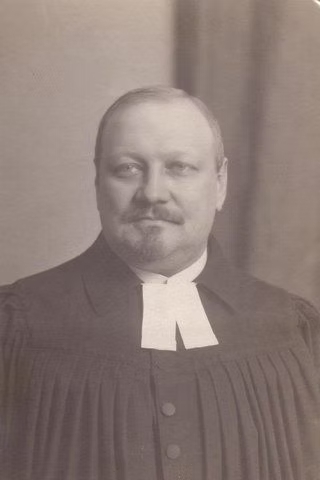
The Term "Andragogy" Is Born
German educator Alexander Kapp first introduced the term andragogy to describe Plato's ideas about adult education. While it didn't gain traction at the time, it marked the beginning of efforts to define adult learning as something distinct from pedagogy.
Andragogy Reintroduced in Practice
The term was revived and used more practically in Germany by Eugen Rosenstock-Huessy, who began applying andragogical approaches in adult education settings. He emphasized that teaching adults required different methods than teaching children.

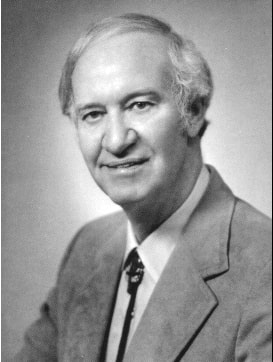
Andragogy Gains Recognition in the U.S.
Malcolm Knowles published "Andragogy, Not Pedagogy". Formally introducing the concept to American educators. He positioned adult learners as self-directed individuals with unique needs and experiences, a turning point in the development of adult learning theory.

Implications of Andragogy for Instructional (Learning) Design
Andragogy changes the way I think about designing learning for adults. It's not just about structuring content neatly or pushing information out. It's about recognising that adult learners come in with experience, expectations, and a clear need for relevance (and the design has to respect that from the start).
One of the biggest shifts is focusing on why the learning matters. Adults want to see the purpose up front. That means I look for ways to tie content directly to their work or personal goals, whether it's through realistic case studies, scenarios, or problem-based activities that mirror what they actually do. When the relevance is obvious, engagement changes completely.
Andragogy also pushes me to consider what learners already know. Adults arrive with established ways of thinking and doing. If the design ignores that, it risks either redundancy or resistance. So I build in places for learners to connect new ideas to their own experiences, to compare, question, and adapt what they already use. Sometimes that's through reflective prompts, other times through activities that surface their existing approaches before introducing new ones.
Another implication is how learning is structured. Adults value autonomy. They want flexibility, in pace, in how they navigate the material, and sometimes even in the order they tackle topics. Modular design, choice points, and tools that let them set personal goals all support that need for self-direction.
Assessment follows the same logic. Rather than just testing recall, I try to design assessments that feel like meaningful tasks. It's more useful (and often more motivating) to have learners apply a concept to a real problem, critique a case, or produce something they can actually use, instead of ticking off quiz scores.
Strengths and Limitations of Andragogy
Corporate Training
Andragogy fits naturally into corporate learning, where employees bring experience, expect practical outcomes, and often juggle multiple responsibilities alongside training. Its emphasis on relevance, self-direction, and immediate application makes it well suited to professional environments. But like any framework, it also comes with limitations that need to be managed.
Strengths
- It aligns with adult priorities. By focusing on real-world problems and clear benefits, andragogy taps into what professionals care about most: learning that saves time, solves challenges, or advances their goals.
- It respects existing knowledge. Employees come into training with background and expertise. Andragogical approaches leverage this through reflection, peer examples, and tasks that build on what learners already know.
- It encourages autonomy. Many corporate learners appreciate the flexibility of modular designs and the ability to tackle content at their own pace, which fits well with busy schedules.
- It supports problem-solving over rote learning. Adults generally respond better to scenarios, case analyses, and authentic tasks than to abstract theory, improving retention and transfer.
Limitations
- It assumes intrinsic motivation and self-direction. Not all corporate learners are equally engaged or proactive, especially in compliance or mandatory programs.
- It can complicate standardization. Experience-based, learner-driven approaches sometimes make it harder to ensure consistent outcomes across large teams.
- It requires careful design to avoid gaps. If learners are given too much freedom without support, some may skip essential content or struggle to meet objectives.
- It may not suit all organizational cultures. In environments where employees expect structured, directive training, heavy emphasis on autonomy can feel uncomfortable or unclear.
"Andragogy is highly effective in corporate settings where learners value relevance, autonomy, and respect for their experience. But it still needs structure, clear purpose, and thoughtful scaffolding to truly deliver"
Informal Learning Experience
Watching Devlin Peck's Instructional Design Lessons
A valuable informal learning experience involved engaging with Devlin Peck's instructional design video lessons and articles on his website (https://www.devlinpeck.com/content). This was not part of any formal course or certification program; it was entirely self-directed, driven by the need to refine workflow approaches, learn practical instructional design models, theories, techniques, and explore portfolio strategies directly tied to current projects.
What Made the Experience Memorable and Successful
What made this experience memorable and successful was its immediate relevance. The content was focused on real projects and practical tools, allowing new ideas to be applied right away. The flexibility to explore topics selectively, skipping foundational overviews and moving straight into workflow breakdowns, scenario design tips, or portfolio examples, made the learning efficient and directly tied to problem-solving.
Key Aspects of Adult Learning Theory Applied
From the perspective of adult learning theory, several aspects contributed to why this experience was successful:
- Readiness to learn was high, as the learning was motivated by actual project needs, not abstract goals.
- The learning was entirely problem-centred, consistent with Knowles' orientation principle. Each topic was explored to solve a current design challenge or improve a specific deliverable.
- It respected self-concept and autonomy by letting learning happen on the learner's terms, choosing topics, sequence, and depth, without imposed structure.
- It also drew on existing experience. The value came not from basic explanations, but from seeing how established instructional design concepts could be implemented more effectively, critiqued, or adapted to current work.
Preference for Informal Learning
My preference for informal learning means leaning heavily on real-world, flexible resources. It shapes how future learning will be approached by prioritising content that is practical, immediately relevant, and self-directed, typically drawn from specialists, targeted examples, and short-form tutorials over lengthy formal programs.
Impact on How Learning Is Sought
It leads to seeking out opportunities that fit into existing work rather than separate from it. This often means following experts, exploring specific project examples, or joining short webinars, rather than enrolling in long, formal courses. The focus stays on solving immediate challenges and picking up ideas that can be tested right away.
Influence on Engaging with a PLN
This approach also impacts how a Personal Learning Network (PLN) is used. It becomes less about credentials or structured learning paths, and more about connecting with professionals who share practical insights. Engagement tends to centre on sharing real experiences, exploring how others handle similar problems, and contributing lessons learned from actual projects, keeping the network dynamic, applied, and directly tied to everyday work.
© Images from Wikimedia Commons in the public domain.