
Assessment & Learning Models
Exploration of assessment, including formative, summative, and authentic assessment. Learning models, including experiential learning, project-based learning, and gamification, are applied to instructional design.

Assessment & Learning Models
Learning Scenario: The Desert Island Survival Game
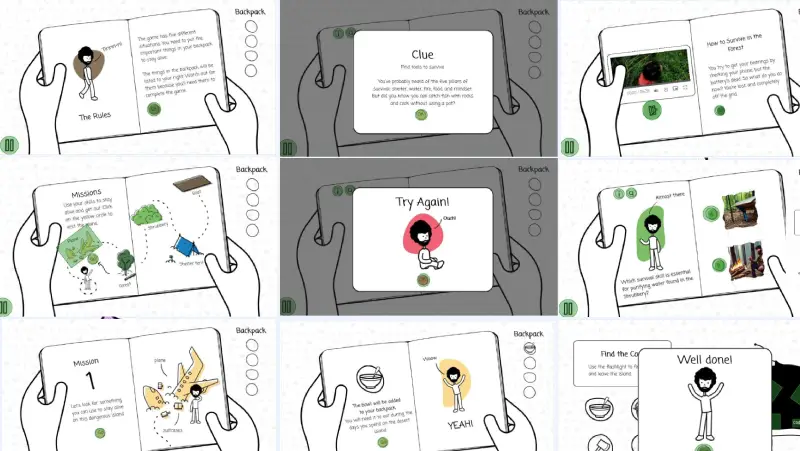
In this scenario, learners are cast as plane crash survivors stranded on a desert island. Their objective is to make a series of strategic decisions that will determine the group's chances of survival in the context of Experiential Learning + Gamification.
The game is divided into four missions, each presenting new survival dilemmas. For example:
- Mission 1 might challenge learners to prioritise shelter vs. signaling for help.
- Mission 2 focuses on rationing water and food supplies.
- Mission 3 deals with navigation choices to explore or stay put.
- Mission 4 pushes final planning decisions as days progress.
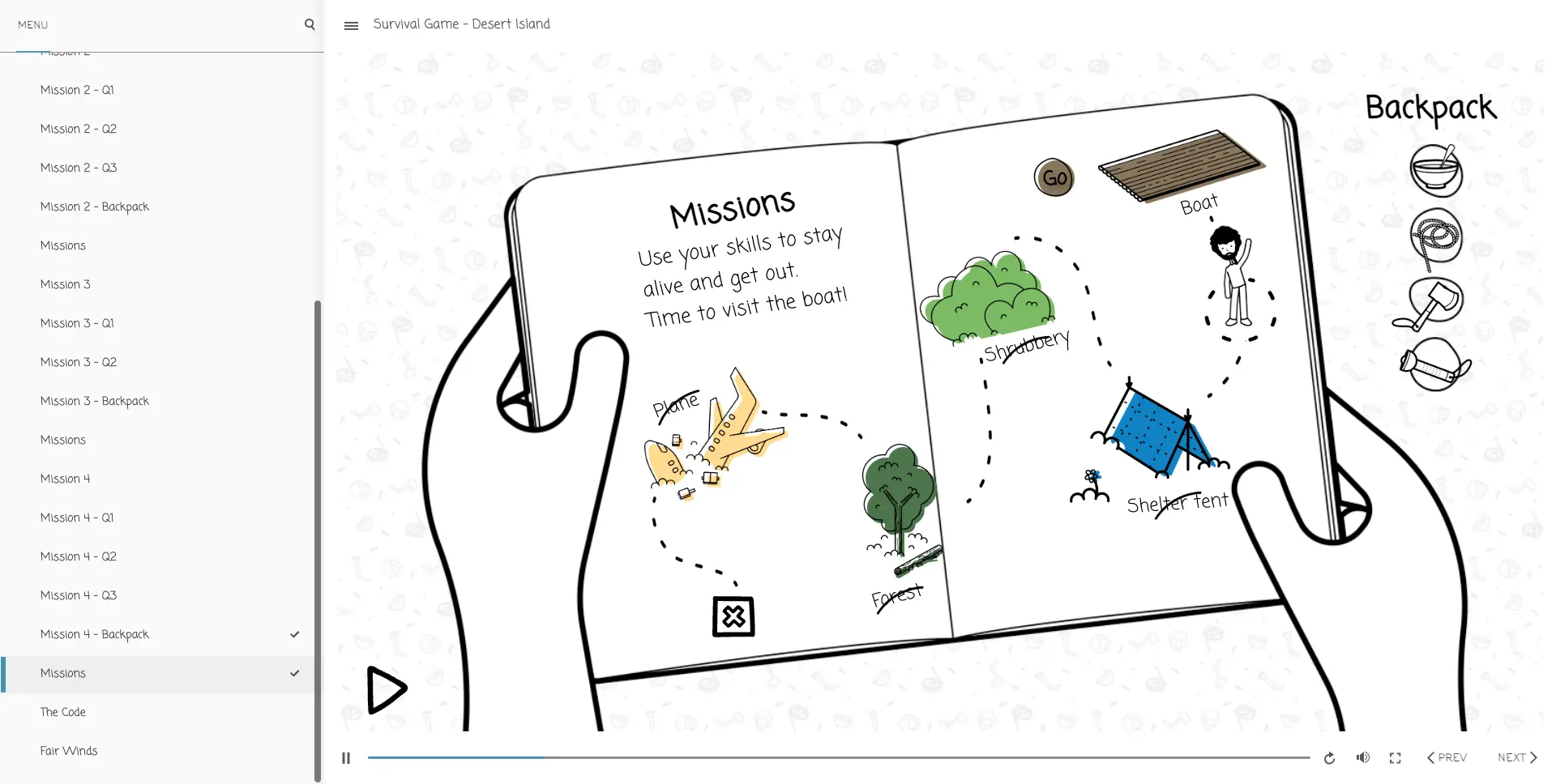
Each mission includes multiple decision questions (Q1, Q2, Q3) supported by info-windows (mini survival facts), clue-windows (nudges toward effective reasoning), and clear "wrong" indicators that guide corrective learning. After key choices, learners pack virtual backpacks (reinforcing applied decision-making).
The experience concludes with a code-cracking sequence, where learners must drag and drop to solve a puzzle tied to their earlier choices, unlocking a symbolic rescue outcome ("Fair Winds").
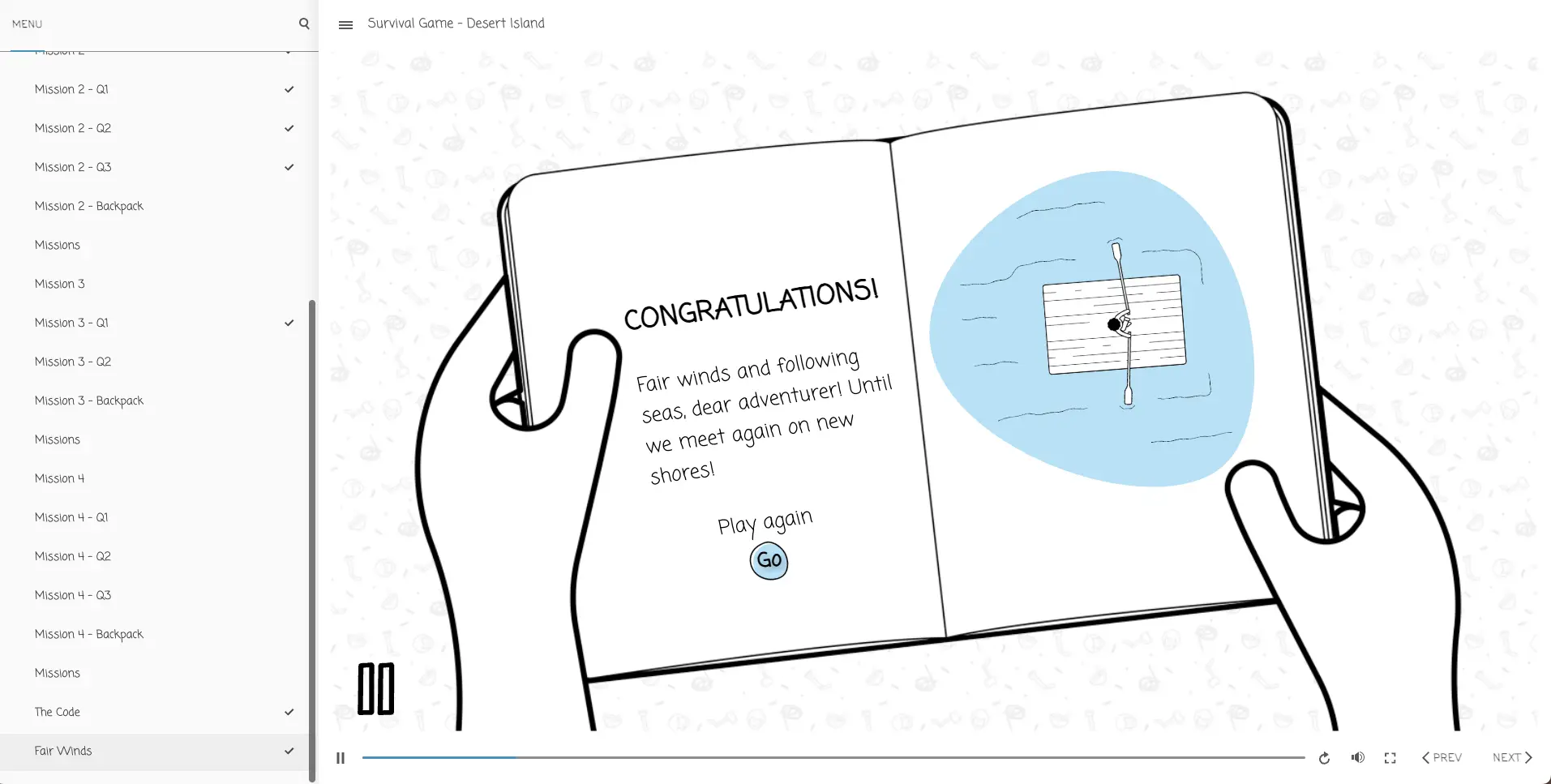
This scenario mirrors real-world problem solving (experiential learning) by forcing learners to make trade-offs under uncertainty, manage limited resources, and justify their priorities, all while receiving immediate feedback and new survival elements (gamification) that shapes understanding.
Experience the Survival GameLearning Model: Experiential Learning
The Survival Game was designed in the context of Experiential Learning and Gamification learning models. It immerses learners in a simulated survival situation where decisions have immediate feedback and visible consequences. Following Kolb's experiential cycle, learners actively tackle realistic challenges, reflect on outcomes, and adapt strategies across missions. The game also leverages gamification principles (clear objectives, missions, clue layers, wrong/correct feedback, and a final code challenge) to heighten engagement, build tension, and sustain motivation.
Formative Assessment
Formative assessment is woven directly into each mission through the game's structured decision points. As learners answer each question (such as choosing to focus on building shelter or creating a fire), they receive instant feedback via info-windows and clue-windows, explaining survival logic or prompting reconsideration. If they make suboptimal choices, "wrong" layers provide additional guidance before they move forward.
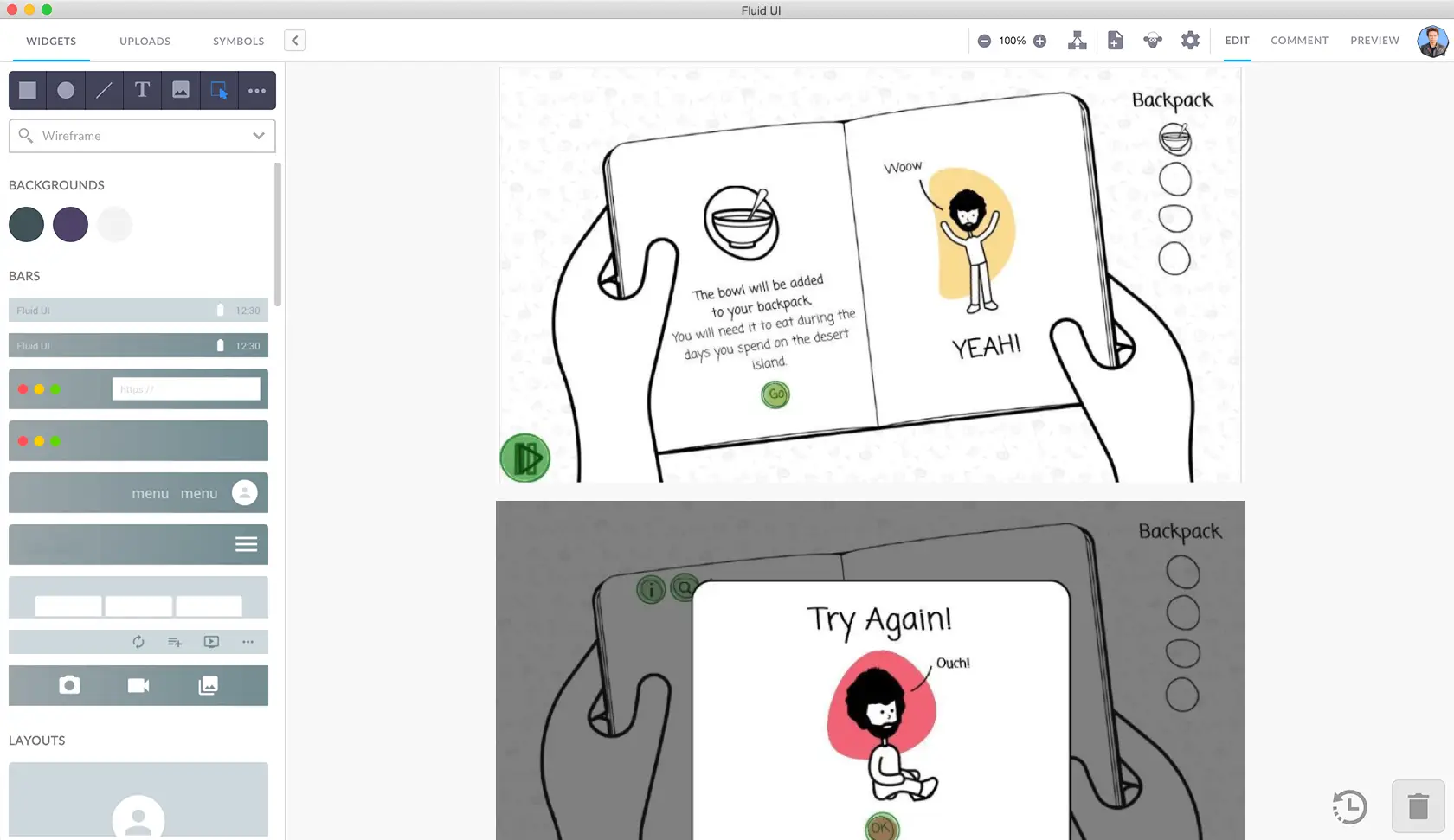
This continuous, low-pressure assessment ensures learners test and refine their reasoning throughout the experience, building confidence and adapting strategies before reaching the final challenge.
Authentic Assessment
An authentic assessment is built into the final stage of the Survival Game through the code-breaking puzzle, where learners must drag and drop to unlock the symbolic rescue outcome. This task isn't just a standalone game element, it requires learners to synthesise what they've learned across all previous missions, applying the survival principles, resource priorities, and decision trade-offs they explored in earlier scenarios.
This assessment is student-centered because it places learners in full control. They must actively apply reasoning developed through their own experiences in the game rather than simply recalling memorised facts. The task reflects a realistic problem-solving challenge: navigating limited information, weighing earlier choices, and making a final critical decision under simulated pressure.
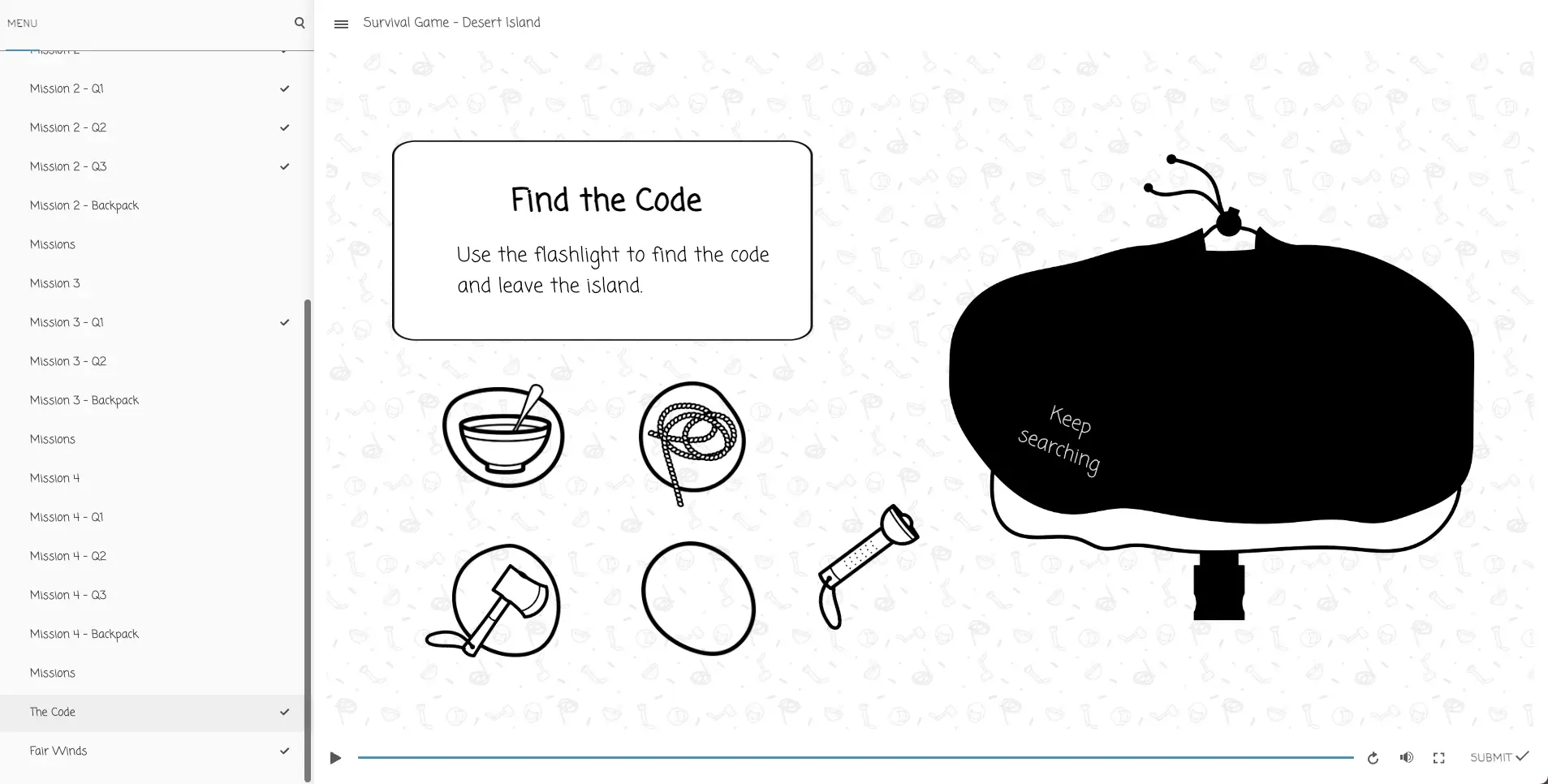
It's also authentic, closely mirroring how complex decisions unfold in uncertain, high-stakes environments, requiring learners to demonstrate judgement, prioritisation, and strategic thinking, not just content recall. This ties directly to experiential learning, reinforcing the model's emphasis on learning through doing, feedback, and iterative reasoning, all elevated by gamification elements that keep the experience immersive and consequence-driven.
Connection to Learning Theory
From a technical learning design perspective, the Survival Game is built on several complementary learning theories that guide both its structure and instructional value.
- Constructivist learning theory underpins the entire experience by allowing learners to build understanding through active exploration, trial, and personal reflection. Instead of being told what to prioritise, learners engage directly with survival dilemmas, negotiate meaning, and form their own conclusions based on outcomes.
- Experiential learning (Kolb) is central to the design, with knowledge constructed through immersive, consequence-based scenarios. Learners cycle through making decisions, receiving immediate feedback, and adjusting their reasoning, mirroring Kolb's stages of concrete experience, reflective observation, abstract conceptualisation, and active experimentation.
- Andragogy (Readiness to learn) is clearly reflected. The game taps into adults' readiness to learn by situating them in realistic, problem-centred challenges that demand new thinking, mirroring situations where new skills are needed to navigate complex or uncertain tasks.
- Cognitive load theory is also addressed. The progressive complexity of missions helps manage intrinsic cognitive load by introducing challenges in stages, while clue-windows and corrective feedback reduce extraneous load, keeping learners focused on the critical elements of survival prioritisation without unnecessary distractions.
Finally, by incorporating gamification, the design sustains interest and commitment, turning what could be a linear exercise into a dynamic, exploratory experience that highlights risk, reward, and iterative improvement, all central to effective adult learning.
This learning experience was created by me as part of my work at Yarket, where we focus on designing engaging, meaningful modules that turn ideas into practical, learner-centred outcomes.